Galen Wolfe-Pauly
Introducing OS 1
OS 1 is a basic, unified system for developing digital communities. OS 1 is for groups of individuals sharing messages, links, and keeps in mind on Urbit.
We designed and constructed OS 1 for ourselves, and we’re actually delighting in using it every day. OS 1 makes it feel like our business and community has a location in the digital world to call house.
The majority of groups of pals and partners handle apps and services to stay linked in the digital world today. We think OS 1 is a much better design.
First, let’s walk through what OS 1 is and how we’ve been using it. Then, if OS 1 is fascinating to you, we’ll inform you how to look for a community grant.
Here we go:
What is OS 1?
OS 1 is a really simple, integrated tool for messaging, sharing links, and composing with a group of individuals. OS 1 is someplace between ‘productivity software’ and a ‘social media network’. We think it’s the start of an altogether brand-new breed of social computing.
OS 1 isn’t our very first effort to develop an interface for Urbit, but it’s certainly the most complete. OS 1 is the first Urbit interface that does not feel like an experiment.
Today, when you boot Arvo (the Urbit OS kernel) and link your internet browser to it, you’ll see OS 1. Anybody could construct their own client or, considering that it’s entirely open source, customize OS 1 nevertheless they like.
For a lot of people, out of the box, OS 1 feels like an app. Given that it’s running on Urbit OS– it’s much more than that.
Let’s walk through the features of OS 1 one by one to see what it’s like.
Groups
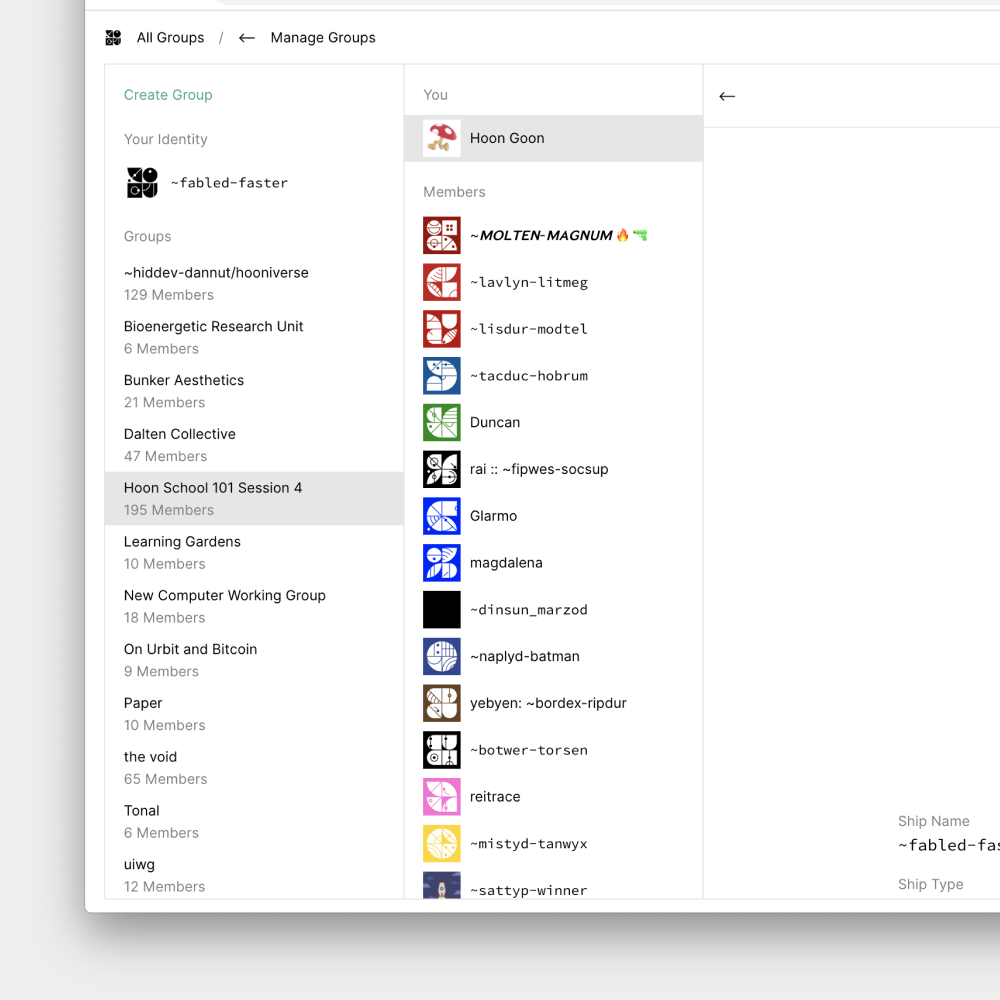
The group is the main structure block in OS 1.
A group of buddies might simply share a couple of chat channels.
Each person in a group is recognized by their Urbit ID: a brief, unforgettable name that you own with a personal secret (and belongs to you entirely). Each group is private and requires an invite.
Let’s walk through each module and speak about what they can do.
Chat
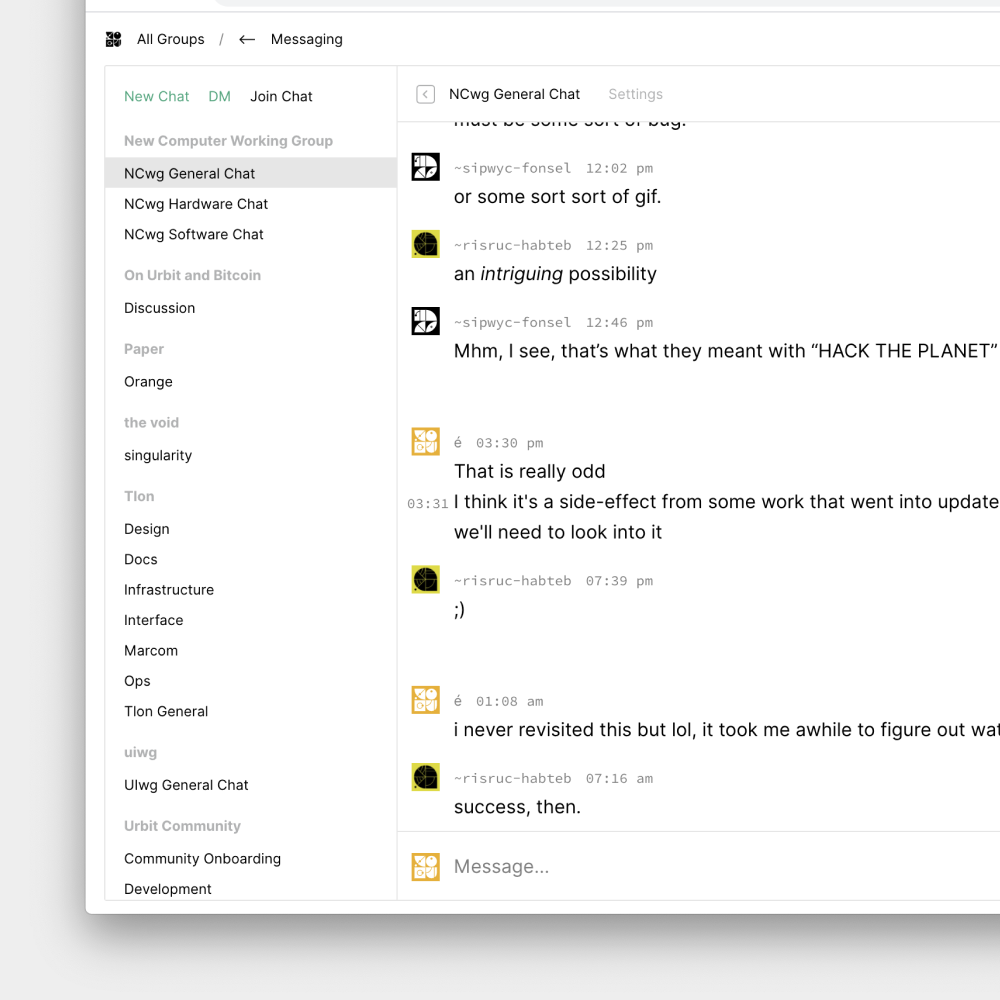
Chat is chat: a sequential list of messages suggested for simultaneous communication. There are already a million ways to chat– however Urbit chat varies in a few important methods.
Initially, each chat channel is just shared between the host and the members of a chat. When you DM with individuals, messages are sent peer to peer. The system is, in truth, decentralized and pseudonymous by default. Nobody knows anything about you outside of your Urbit ID.
Second, each chat message is encrypted and signed by your Urbit ID. Once again, we don’t call Urbit ‘safe’ yet because it’s unaudited– but we’re working to have Urbit examined this year.
Third, chat in Urbit OS is a protocol for sending messages in between ships.
( If you’re curious to try one of these things, or have a concept about something you ‘d like to explore– think about sending a proposal in our grants program We regularly reward contributor deal with address area.)
We think about chat as a primitive, not simply a ‘better IRC’. But even in the basic kind it remains in today, chat is important to providing a feeling of being at house. There’s no way to provide a complete user interface for groups without chat.
Anyway, not whatever can take place in a chat. Let’s keep moving.
Links
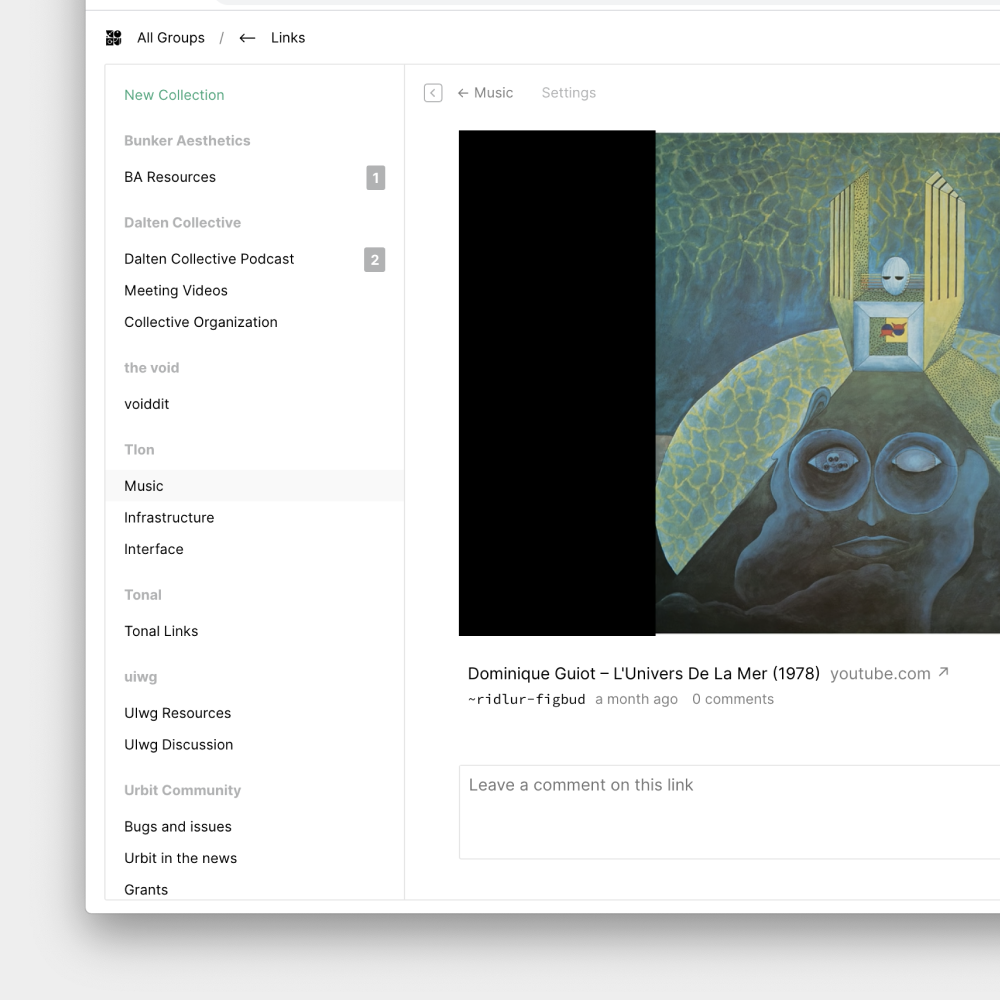
Links is a bit like Hacker News or Reddit.
We utilize links to collect external references and track things we’re believing about.
We initially thought of links as developing into more of a general-purpose ‘collection development’ user interface. One where you can gather images, video, URLs, maybe even runnable code and so on into a single channel. We’ll arrive.
Publishing
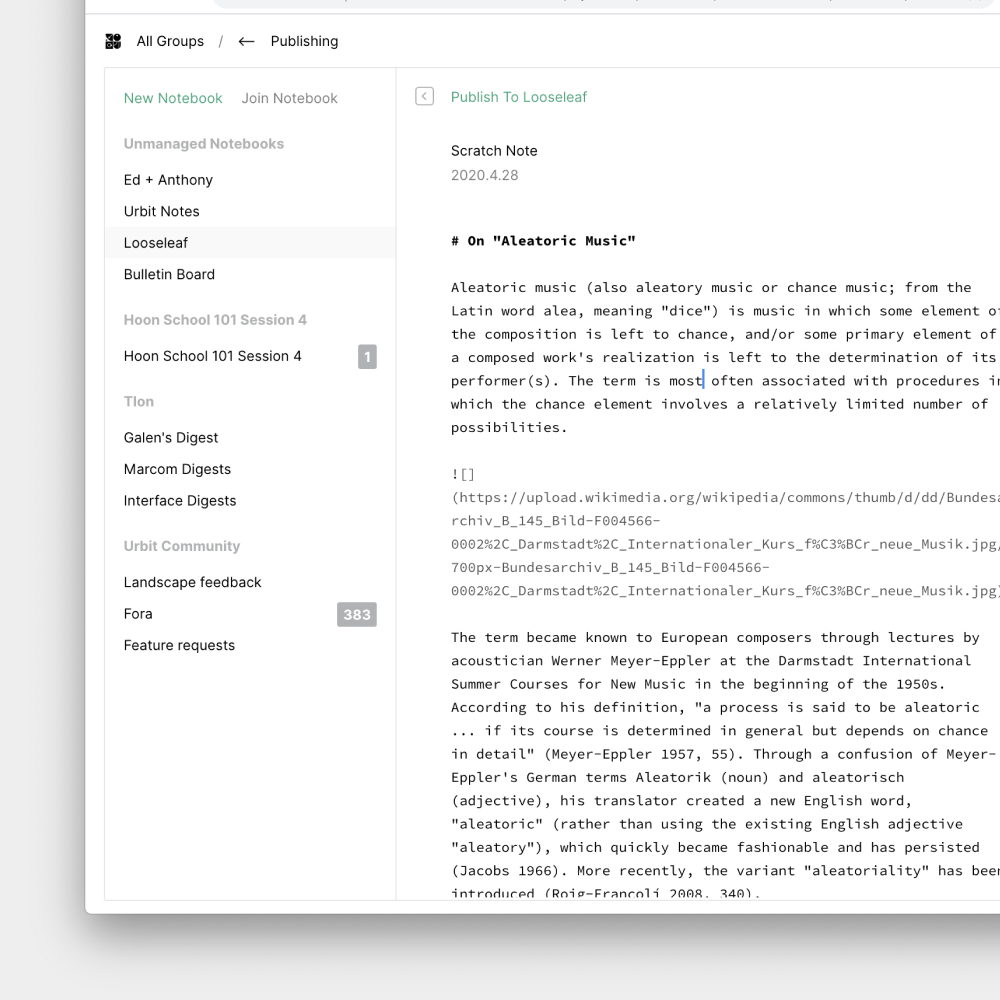
Publishing is somewhere in between a blog and a note-taking system. A Publish note pad is a list of markdown files with optional comments. A personal Publish note pad is like a journal, a group note pad can be like a forum (with comments on) or a collective blog site.
We utilize publish for both long-form discussion and one-way interaction about what we’re working on in its current kind.
Publish, like all our other modules, is an interface to a generalized protocol for saving text. We have high hopes for how Publish can develop into a flexible tool for notetaking and conversation with richer content types and much better controls over structuring discussion.
Modules
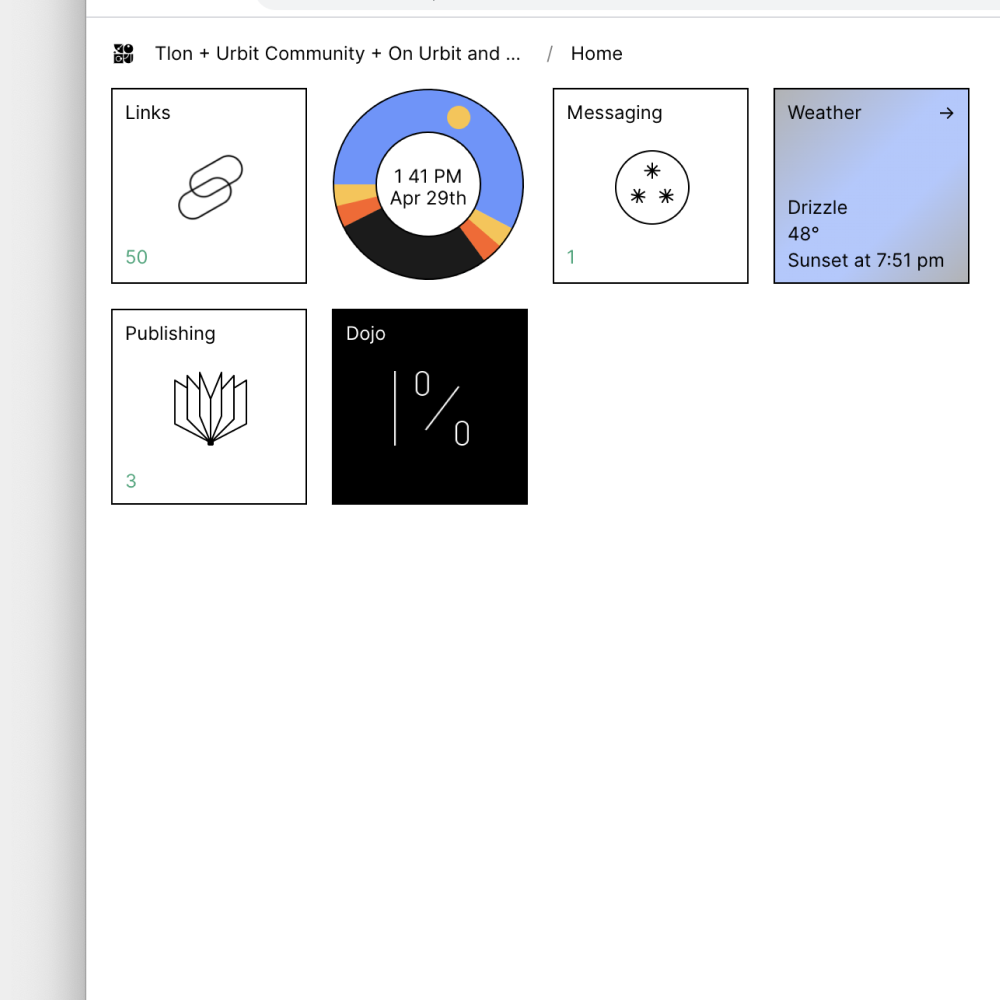
You’ll discover a couple of other things on the home screen: a clock, the weather, and an easy command-line that we call the Dojo. These are system-wide utilities that aren’t group-specific.
The clock and weather condition tiles are simple indicators of the state of the outside world.
Dojo
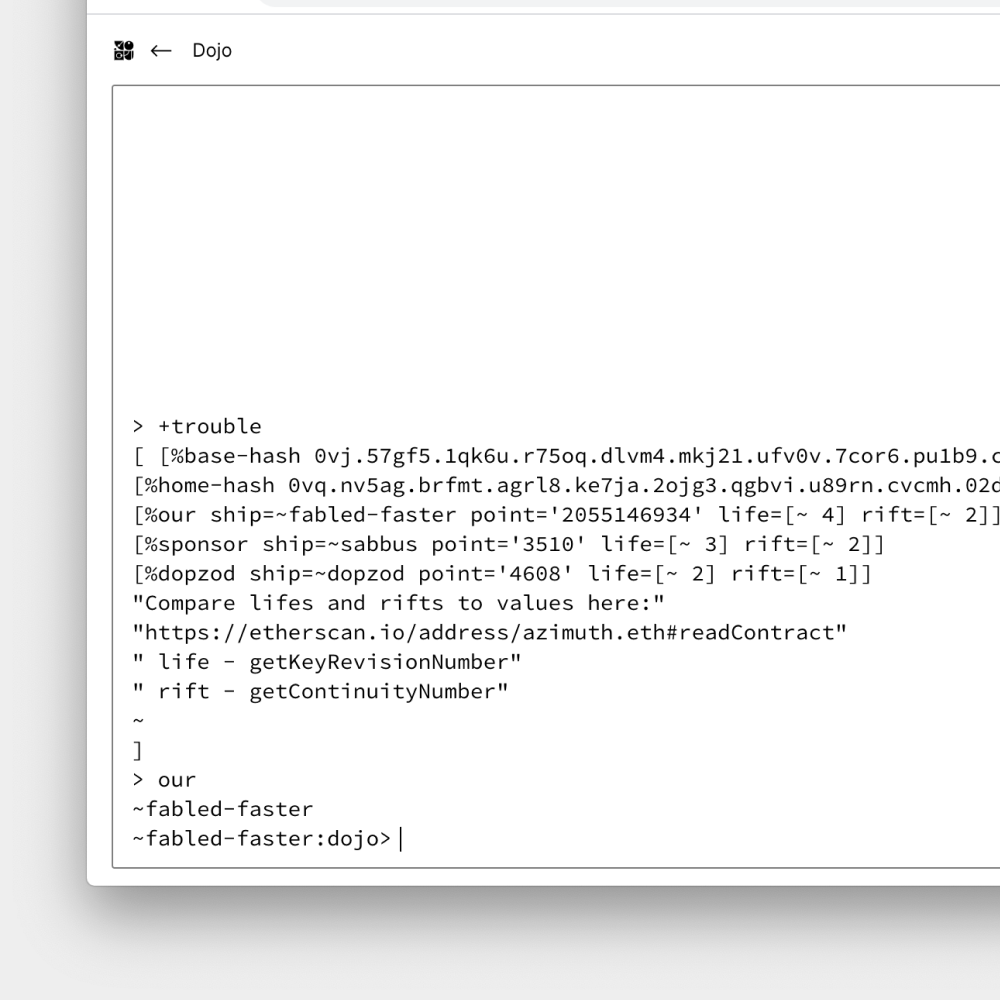
The Dojo gives you a quick method to see that, under the hood, Urbit OS is a powerful general-purpose system. The system hasn’t evolved to the point that our libraries, structures, and modules are polished to our standards. Because it’s still early, we can’t declare that it’s easy to develop on top of this platform. We desire it to become much simpler.
Why we made OS 1
We made OS 1 since we wished to start the process of re-centralizing our digital lives on a platform we actually manage. Replacing all the services we use at one time is difficult– so we picked a suite that we felt would work well together. We have actually constantly felt that a person of the most exciting things about Urbit is in bringing your digital life together in such a way that seems like home.
The digital house, we believe, is what our computer systems are suggested to be but just can’t remain in a world of cloud services. When upon a time, thirty years ago, your desktop computer was an open-ended tool that was fairly simple to understand and utilize, lasted a quite long period of time, and came from you in every method.
OS 1 is a primary step down the road back to a system that’s easy, long lasting, and comes from you in every way. It’s a long road, and we seem like we have actually made a really substantial advance.
One truly important aspect of OS 1 is the pattern of ‘groups sharing modules’. This pattern makes it completely clear how a virtual computer can outcompete a bunch of various services. As the collection of modules in OS 1 → N grows, we make it easier for others to contribute modules, and we increase the versatility of linking modules our system rapidly outruns the untidy, detached world we’re currently stuck in.
OS 1 isn’t fully grown adequate to be easy for outside contributors to quickly add modules– but it is open source, and anybody is welcome to tinker and experiment with modifying it. We run a grants program to reward contributors for enhancing any part of Urbit OS.
Looking ahead
By utilizing OS 1 you inherit all the benefits of running Urbit OS. Each user runs their own node completely separately. Everyone utilizing Urbit OS owns their own identity and information. And every Urbit OS node communicates over an encrypted and authenticated network. (Once again, We do not yet call Urbit OS ‘safe’ since it hasn’t been investigated.)
OS 1 is simply a customer for Urbit OS, obviously. Other people could write their own clients that are completely different– like different windowing systems for Linux. Our hope is to construct a customer that consists of user interface parts and frameworks that make it extremely simple to build modules for groups of individuals to share. Other clients could potentially develop entirely new methods of engaging with the underlying system.
There are 2 threads by which OS 1 develops into OS 2 and beyond. By becoming a more effective system and second, by adding modules to broaden our supported modes for communicating.
In its current type, OS 1 by no means exposes all the power of the underlying system. Our technique to building OS 1 was to focus on the quality of the UI, and accept that it will feel like a monolithic app. We’re currently working to evolve our user interface into something that feels flexible to an ordinary user and developers can quickly extend and develop on top of.
Specifically, we desire better affordances for putting multiple streams of information on the screen at once, much better keyboard shortcuts and navigation affordances, much better libraries and structures for building modules. We want a standalone client and a single login system. These are a few of the important things currently on the drawing board.
As far as modules are worried, there are a lot of things we ‘d like to construct to note them all. We ‘d truly like to have actually threaded conversations; short, Twitter-style messages; biometric and status tracking; an e-book reader and annotations system– and that’s just to name a few we see in the near term.
We’ve long because felt that the most effective thing about Urbit is that it’s a general-purpose system. OS 1 puts us on the road to offering people an actual material sense of what utilizing a general-purpose networked computer feels like.
As we expand the affordances of the system and add modules over the course of OS 1, 2, and beyond we expect to deliver a system that can foster daily imagination.
Becoming a homesteader

As a distributed team attempting to stay connected, we like using OS 1 from day to day. We ‘d truly like to hand-onboard a little group of like minded groups of people who want to explore surviving on the fringe of the digital world. Towards this end, we began the community grants program.
Each community that’s chosen will get a block of address area to share, direct assistance, and (in the near future) complimentary hosting.
Please tell us a bit about yourselves here
Comments
Post a Comment